Alone in Sichuan, for the New Year
There's one thing no one tells you about solo travel: the hardest part isn't being alone. It's choosing to be alone at the exact moment when everyone else is going home.
I left for Sichuan during Chinese New Year. The time when, all across China, everyone goes home to family, when the stations overflow with people heading back to their hometowns. And there I was, backpack on, heading in the opposite direction — alone.
If you ask me why I did it: because I wanted to. It was a period of my life when I did a lot of things on my own, and I loved that solitude — that way of keeping myself company, of going where I wanted, when I wanted. Since I'd never travelled entirely alone, I thought: why not, this is the moment.
It wasn't a carefully ripened plan. A last-minute decision, a ticket booked in a rush. Looking back, I think it was exactly what I needed.
Arriving in Chengdu, exhausted
First evening: I step off at Chengdu East station, wrecked by the night train. No carriage romance like in the movies, no plot twist. Just tiredness and excitement, mixed together.
And already, a first headache: I hadn't confirmed the address of my accommodation. The result — two metro changes, a backpack weighing a ton, going round in circles before finding it. Welcome to solo travel: no one to carry half the bag, no one to double-check the map for you.
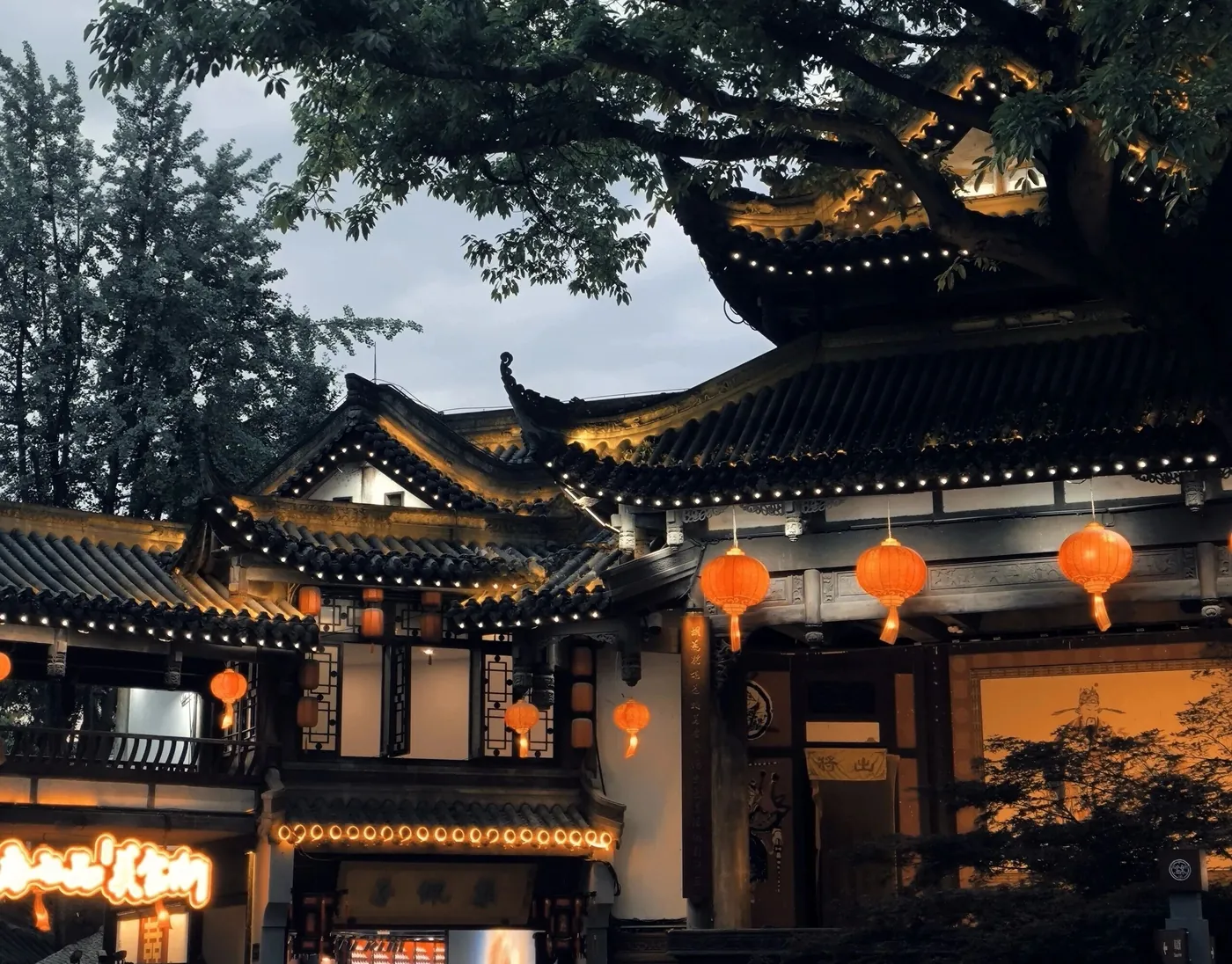
The next day, the real Chengdu begins. Du Fu's Thatched Cottage (杜甫草堂), a haven of greenery and poetry — I was so deep in the fog of tiredness that I barely thought to take a photo. Then Jinli (锦里), the old lane, and the Wuhou Shrine (武侯祠) where, as luck would have it, a temple fair was on that evening.
It was in Jinli that I understood something about this city. Starving after hours of walking, I finally sit down — glutinous rice balls, dan dan mian, little local dishes. And there, in several stalls, you can watch a face-changing performance (变脸) just by ordering a few plates. The staff, seeing I was on my own, spontaneously found me a seat with a perfect view of the stage.
That little thing — caring for the person who's alone — would come back again and again throughout the trip. And it's precisely what disarmed me.
Mount Emei, and a New Year's Eve like no other
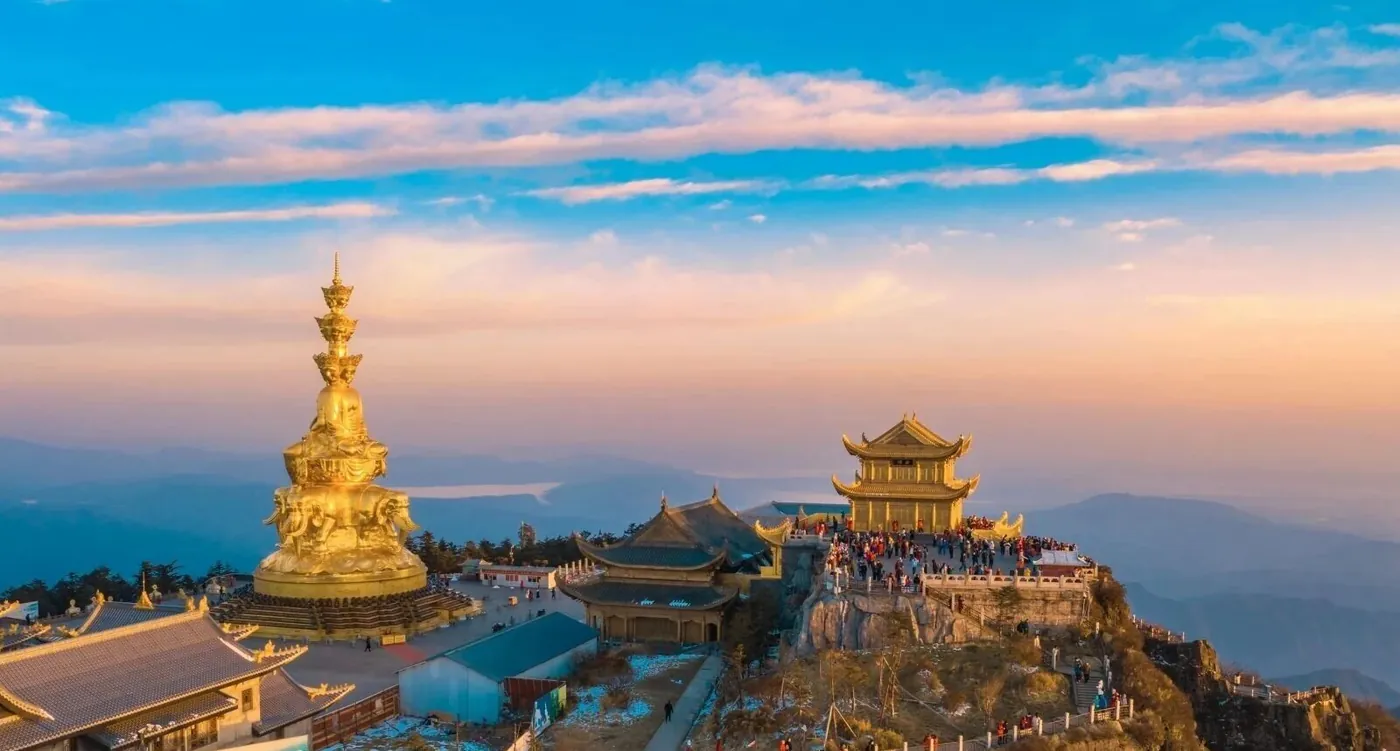
From Chengdu, off to Mount Emei (峨眉山), a sacred mountain of Buddhism. (A small lesson in humility: I missed my train from dawdling. Note for next time — punctuality, when travelling, is non-negotiable.)
The bus road winds along the mountainside, cliff on one side, summit on the other — dizzying but splendid. I'd chosen Leidongping (雷洞坪) as my stopover, on the advice of hiker friends who'd passed through before me. During the festive period there were few people about: the guesthouse owner upgraded me for free. That kindness again.
And then comes New Year's Eve. The most family-centred night of the year.
I'd missed dinner time. Wandering around a nearby temple, I come across the kitchen staff — tender-hearted people who offer me a vegetarian meal in the back kitchen. That was my New Year's Eve meal: a bowl of monastery cooking, behind the scenes of a mountain temple.
It's dark outside, the kitchen smells of hot oil and soy sauce. Three people bustle about; they motion for me to sit on a plastic stool. They serve me a steaming bowl of tofu and mushrooms, rice, green vegetables I don't recognise. We barely speak; they smile at me. Someone hands me a mandarin at the end. Outside, the temple bells ring out. I think of my family, far away, and I feel strangely, deeply, like I belong.
Another solo traveller was eating there, in the same spot. We hit it off and agreed to climb to the summit together the next day. Around midnight, I went to the temple to offer incense. A New Year's Eve like none I'd ever lived — and probably never will again.
Sunrise at the Golden Summit
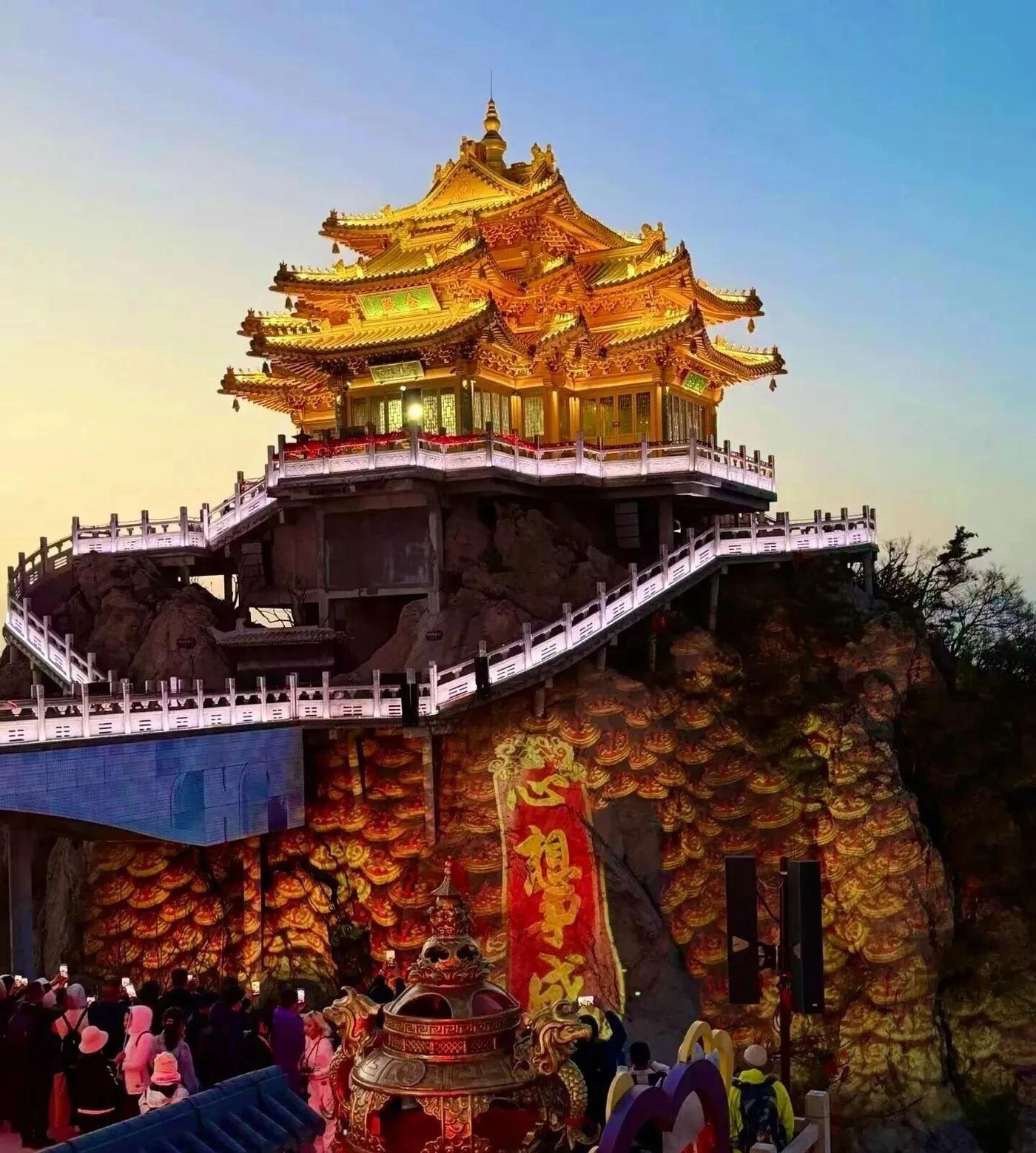
Up before dawn. We set off in the dark, torch in hand, to the cable car. A long wait in the freezing wind, the queue stretching out behind us.
And then, at the Golden Summit (金顶), the sun rises.
Someone once told me, while climbing another mountain: “Watching a sunrise is really just watching the sun come up.” At the time it struck me as disarmingly cynical. Up there, that morning, I understood it was wrong. No sea of clouds, no frost on the trees as I'd hoped — just the sun, and me, and the road I'd travelled to be there.
Above all, there was a kind of personal growth — and a few regrets too.
The last hot pot
Back down in Chengdu, I had to mark the occasion. The most popular hot pot had dozens of people ahead of me — I gave up and found another well-rated spot. Duck intestines, duck blood, maodu tripe, beef, cabbage, Chinese yam. Seeing I was alone, the waiter mixed my dipping sauce for me himself.
At the next table, a mother and son from Northeast China ordered exactly the same dishes as me after watching what I did. We chatted a little. It was the best meal of the trip.
For those who don't know hot pot, it's not at all the same thing from one region to another. In Beijing, where I'm from, the old-style Beijing hot pot has a soul and a character that are warm, simple, gentle, satisfying — and, for some, melancholy: it's like coming home after a hard year of work, every difficulty dissolved into the sesame-paste sauce, comforting. But Chengdu hot pot feels like something else: spicy, fiery, enthusiastic, varied — like a grateful bonus from life giving you a boost, in its sesame-oil sauce, supple.
What I brought back (and left behind)
Last day: the Kuanzhai alleys (宽窄巷子), packed with people at the start of the lunar year. A homemade yoghurt and a flatbread for breakfast. Then the airport.
A little closing anecdote: my hiking pole, companion of so many mountains, had to be checked into the hold — the packaging cost more than the pole itself. It stayed behind, at Chengdu airport. In a way, that's fine by me: a part of me stayed in Sichuan.
The world is harsh sometimes. But kind people are the most numerous in it — Sichuan taught me that, one bowl of soup and one smile at a time.