China: 5 missteps you can easily avoid

I was born in Beijing, and I've lived in France. So I have a slightly unusual vantage point: I see both sides. And when French friends tell me about their trip to China, I always recognise the same little slip-ups — never serious, never unkind, but avoidable.
The good news: none of these mistakes will ruin your trip. Chinese people know perfectly well that you're a foreigner and are utterly forgiving. But avoiding them means gaining ease, respect, and often… smiles.
Here are the five I see most often.
01.Saying “no” too directly
In France, saying things plainly is a virtue. In China, it's more delicate — because of a central notion: face (面子, miànzi).
Preserving the other person's image and honour is essential. Making someone lose face, even unintentionally, creates lasting discomfort. So correcting someone publicly, raising your voice, or answering with a curt “no” are things to avoid in public. People prefer the “maybe,” the detour, the smile.
It throws off many French people, used to direct debate. But once you've understood this mechanism, everything flows more smoothly.
02.Sticking your chopsticks upright in the rice
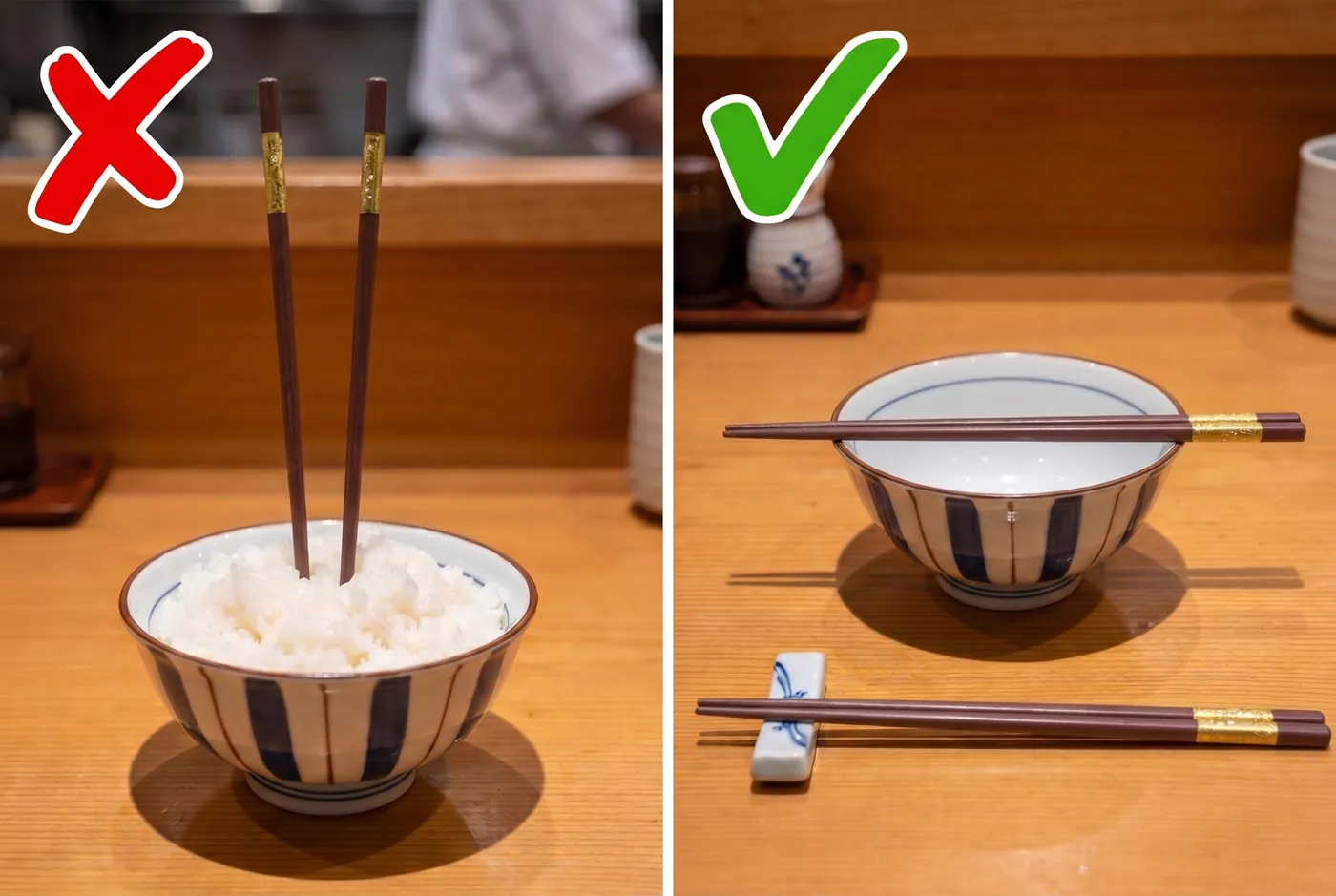
This one, almost everyone does at least once. Sticking your chopsticks upright in a bowl of rice evokes the incense sticks placed for the dead. It's associated with mourning — so genuinely awkward at the table.
The habit to adopt: rest your chopsticks across the bowl or on the chopstick rest. And while we're at it, avoid pointing at people with them, or skewering a piece of food on them.
03.Wanting to leave a tip
In France, leaving a tip is a polite gesture. In China, it can be… offensive.
Tipping culture is almost non-existent. Leaving change on the table can be misread: either the waiter thinks you've forgotten your change, or they see it as a slightly condescending gesture.
The real “thank you” in China is a big smile and a sincere “xièxie.” It's worth far more than a few coins.
Several of my French friends have told me about incredible experiences in China — the locals are so warm that they wouldn't let them pay for a meal, a souvenir. Fair warning: you may well be spoiled.
One important nuance, though: I increasingly hear of travellers who exploit this generosity, some even going so far as to order locals to give them things, convinced their nationality grants them special status. Chinese kindness is not an exclusive concession — it's a people's choice, a way of being in the world. In return, it deserves a minimum of recognition and respect.
04.Not having set up mobile payment

This is probably the most practical mistake, and the one that causes the most concrete trouble.
In China, mobile payment is king. The vast majority of transactions go through WeChat Pay or Alipay, with a simple QR-code scan. As a result, many shops barely keep any cash, and Visa or Mastercard cards work almost nowhere outside the big hotels.
The classic traveller's trap: arriving with cash and Western cards, and getting stuck at a convenience store over a simple bottle of water.
05.Forgetting that Western apps are blocked
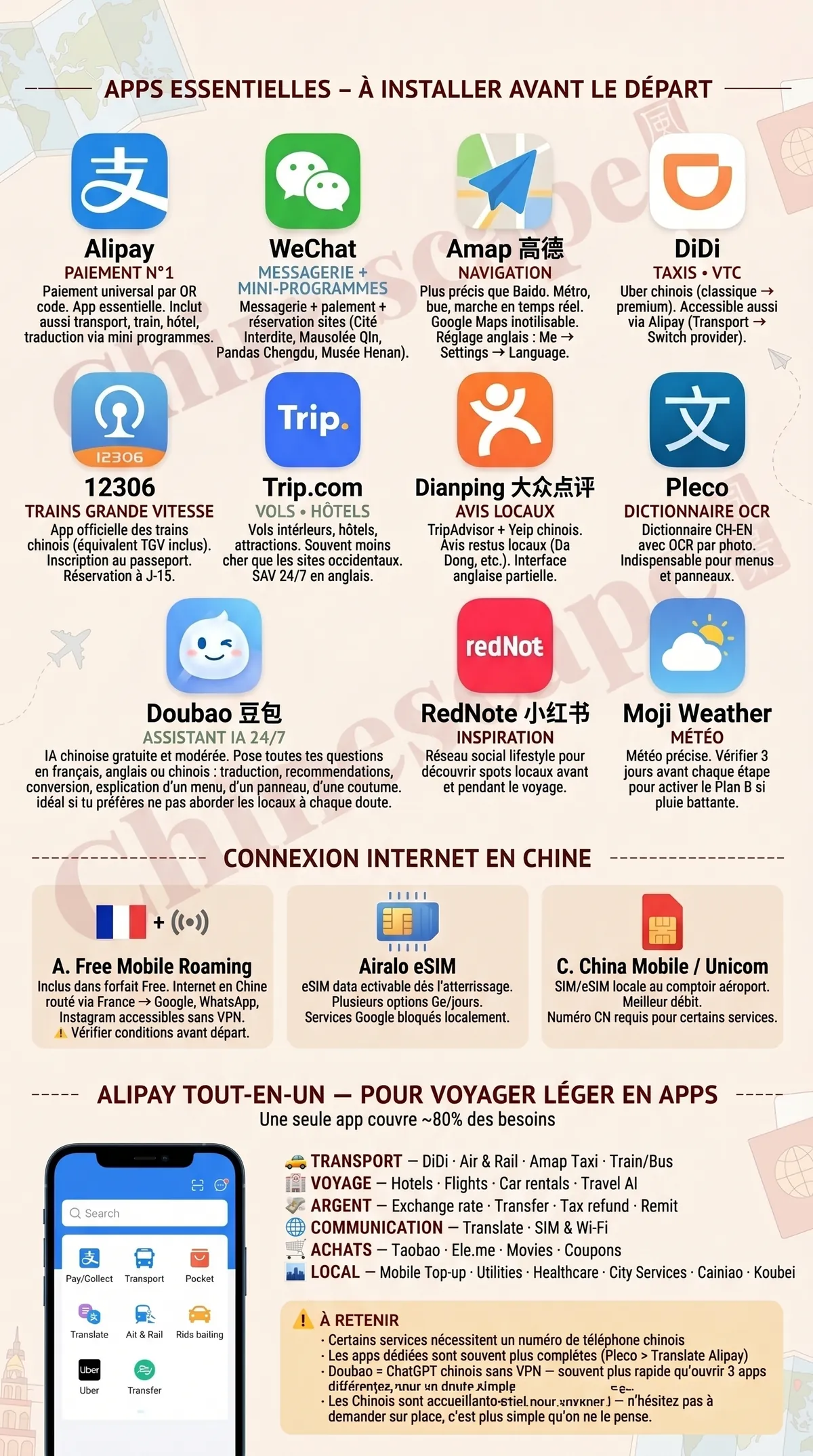
The moment you land, surprise: Google, WhatsApp, Instagram, Facebook, YouTube… everything becomes inaccessible. It's one of the most common mistakes — not having anticipated it.
If you plan to use those services, you need to prepare before departure (the technical solutions are sorted out in advance, never on the spot once you're blocked). And above all, download in advance the apps that will actually be useful: WeChat, Alipay, a maps app that works locally, a translator.
I know French travellers who are aware of this point but don't take it seriously, and the moment they arrive in China and want to make the most of the services, the activities, the practical, modern life, they grumble and regret not having downloaded those recommended Chinese apps.
Honestly, relax
If I had to sum up: these mistakes don't make anyone a bad traveller. Chinese people are warm, curious and forgiving towards foreigners — a simple, clumsy “nǐ hǎo” is often enough to break the ice and spark smiles.
The real secret isn't knowing everything. It's arriving curious, attentive, ready to observe before judging. The rest takes care of itself.
China is one of the easiest and most accessible countries in Asia to travel in. Don't let stereotypes and biased information keep you away.