Beijing, where I come from
They say the people who know a city best are those who live in it. And that those who love it most deeply are the ones who were born there.
I was born in Beijing. So naturally, when I talk about it, it isn't the voice of a tour guide — it's something else. A tenderness, an attachment, something long and fine like a thread of silk.
My Beijing is a living memory, warm and gentle at once — like being shot through time without missing a single moment. The smell of breakfast: savoury doufunao and baozi, sweet soy milk and a long Chinese fried dough stick. A voice — that of Beijing's grandfathers and grandmothers, the most traditional ones, speaking the purest Beijing dialect; to me, it's a song of childhood. And that view, so striking, so alive, so impressive — a city that changes its face at full speed, slipping into ever more modern and varied clothes, never once closing its eyes. Beijing is a city full of opportunity, full of energy, in the middle of its own growth. And yet it stays surprisingly humble.
To me, Beijing has never had a single face. It's like a double-sided embroidery: on one side, imperial grandeur, heavy with centuries and history; on the other, everyday life, burning and alive, made of small joys and human warmth. The two press against each other, and it's from their blend that the city's soul is born.
The imperial face
What strikes you first, arriving in Beijing, is the solemnity. A grandeur written into the very bones of the city.
There's that invisible central axis running through Beijing from south to north, like a spine — Yongdingmen Gate, Qianmen, Tian'anmen, the Forbidden City, Coal Hill, the Drum Tower. Everything is aligned, symmetrical, ordered. Every brick follows a rule, every arrangement asserts a hierarchy. It's a city conceived as an act of power.
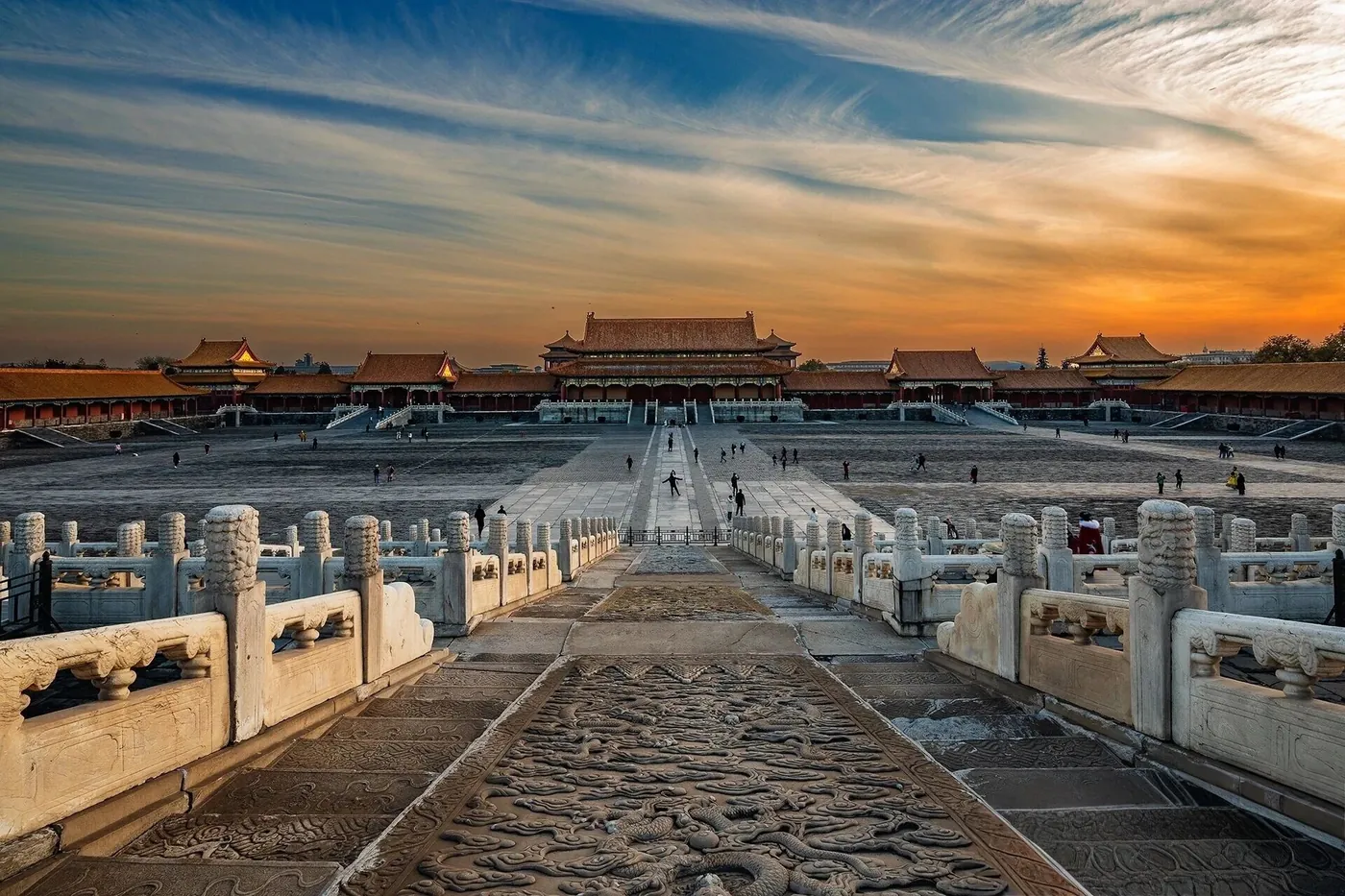
The Forbidden City is its purest expression. Vermilion walls, golden tiles, carved gates, vast halls. The throne in the Hall of Supreme Harmony has stood empty for a long time, yet you can still feel the weight of imperial power. Here, every stone, every tree in the imperial garden is not a backdrop: it's living history.
And then there's the Great Wall, winding along the ridges like a sleeping dragon (loong 龙). It's the ambition of emperors, and the backbone of a people. When the wind blows across it, you'd swear you could hear the distant echo of battles and passing dynasties.
In China we say: “If you've never climbed the Great Wall, you're not a hero.” So the first time I became a hero was in 1999, when I was 3. That's perhaps where I understood why I'm so ambitious — and so stubborn too, let's be honest.
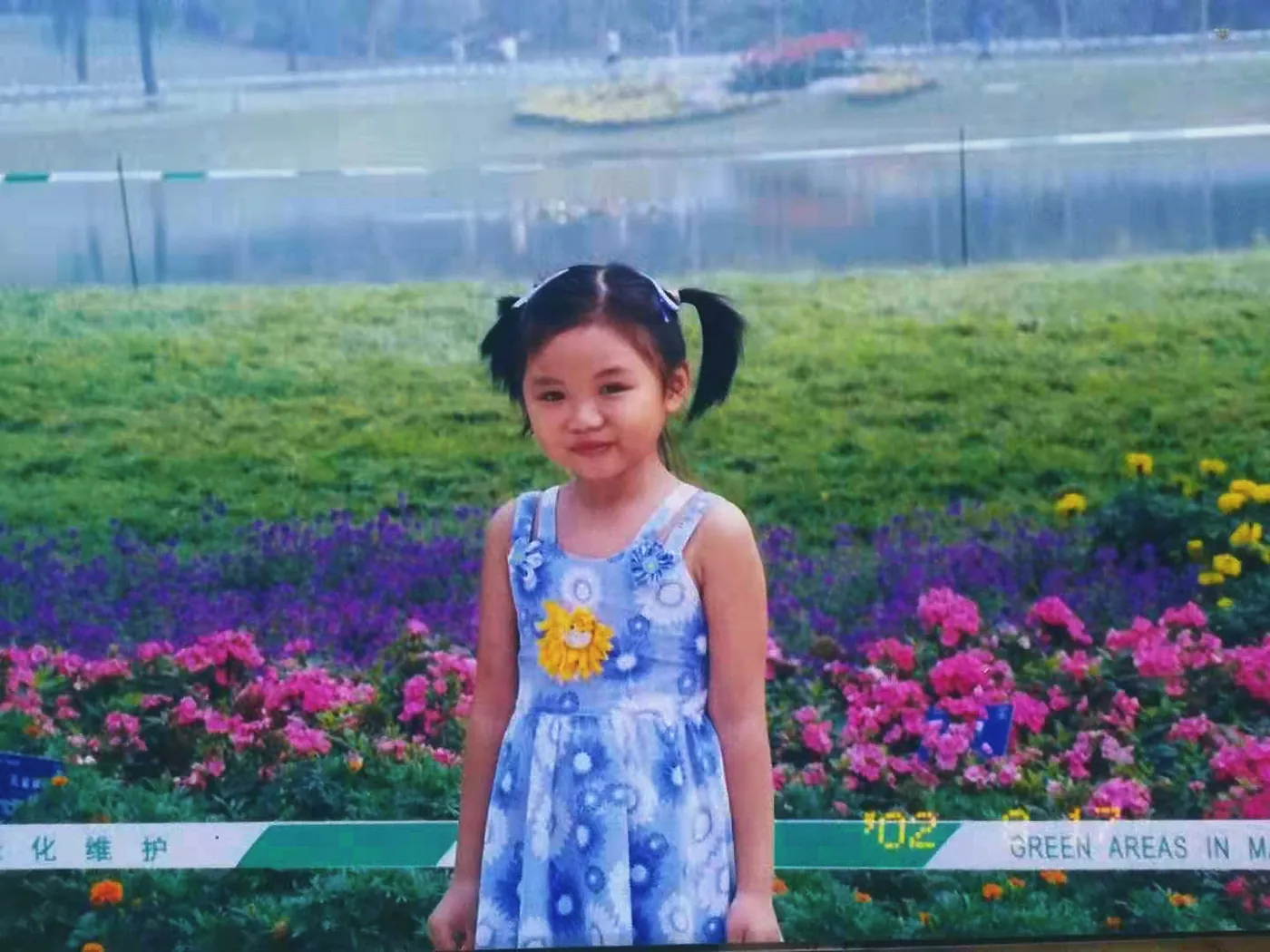
A little anecdote from that time: China had only just opened its cultural doors and was welcoming its first groups of international visitors, mostly Americans. And the place where I was born and grew up until I was 7 was the embassy district. My first close encounter with an international friend was on the Great Wall — a young American couple travelling to Beijing for the first time, and me, being a hero even at 3, faced with very high steps, flatly refusing to be carried by my father. The mother was crying with laughter, not understanding where this fierce pride came from. The couple stopped: “Bravo, you're so strong,” “Your daughter's so cute” — my mother still quotes them to me — and then they asked for a photo with me. There it is, the very first international experience I can remember!
To the northwest, the imperial gardens — the Summer Palace (Yiheyuan), with its Kunming Lake and Longevity Hill; and the Old Summer Palace (Yuanmingyuan), reduced to ruins yet tragically beautiful. One tells of splendour, the other of downfall. Both say something about the city.
The everyday face
If imperial culture is Beijing's skeleton, popular culture is its flesh — what gives it its warmth, its smoke, its life.
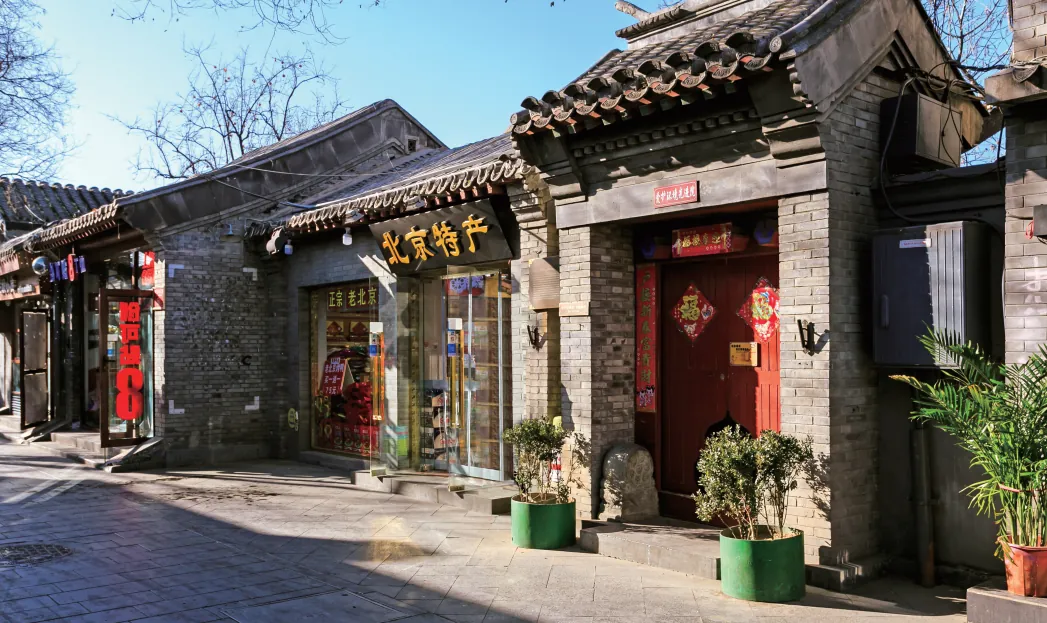
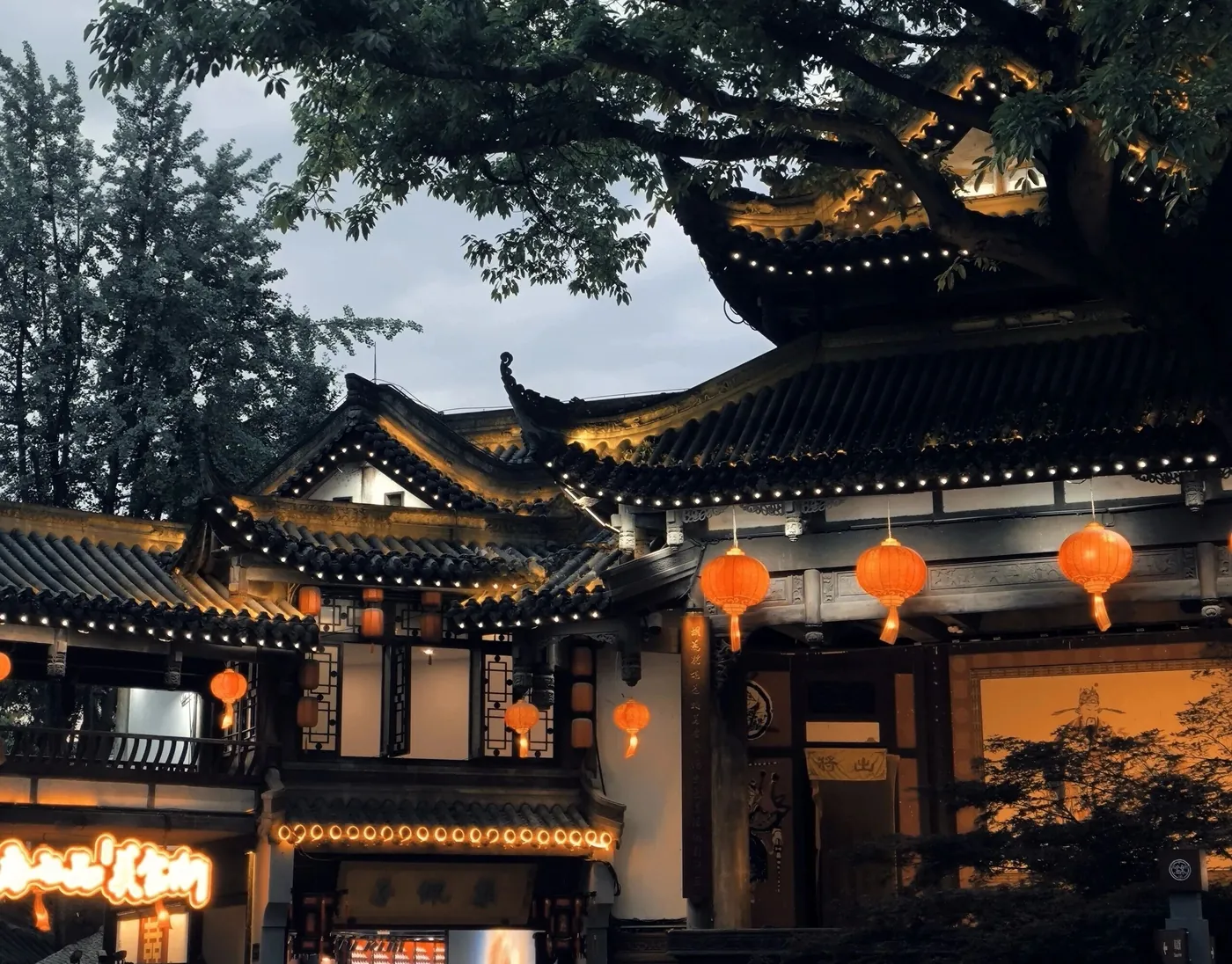
That face lives in the hutongs, those tangled lanes. You leave the solemnity of the palace walls, and all at once you step into the truest Beijing: grey bricks, weathered door knockers, tall gateways, trailing wisteria. No grand master plan here — just the most moving of ordinary lives.
Each hutong has its own character. Yandai Xiejie (烟袋斜街), shaped like a tobacco pipe, paved, lined with old shops — snuff bottles, old-fashioned kites, handicrafts — and opening onto Yinding Bridge, from which you can gaze out over Houhai Lake. Nanluoguxiang (南锣鼓巷), one of the oldest hutongs, with its eight lanes on each side like the legs of a centipede. Mao'er Hutong (帽儿胡同), refined, where beautiful courtyard houses (siheyuan) still stand, along with the former residence of Empress Wanrong.
In the morning, the breakfast stalls steam, the smell of douzhi (fermented mung-bean drink) and jiaoquan drifts through the air, old folks walk their caged birds, neighbours greet one another. In the evening, smoke rises from the kitchens, children run, the elderly fan themselves as they chat. The simplest, most beautiful Beijing.
And then, deep in the lanes, a voice that crosses the centuries: the song of Peking opera (京剧). Born of the people, matured in the capital, it weds precisely the two faces of the city — the refined rigour of the court and the liveliness of the streets. The Drunken Concubine, Farewell My Concubine… these aren't just shows: they're a part of Beijing life.
The Beijing spirit
But what I miss most, far from Beijing, is something intangible: the spirit of the people.
Beijingers are warm, frank, talkative. A broad-mindedness in the blood, a way of not overthinking things. They aren't distant: they'll approach a stranger with a smile, and in two sentences the distance melts away.
The best example is the Beijing taxi driver — the city's true unofficial “spokesperson.” Get into a cab and a conversation starts: from affairs of state to everyday matters, from the city's development to geopolitics. He holds forth, argues, settles the question, with a disarming confidence — whether you answer or not. No flattery, no surface politeness. Just that frankness, that heart wide open to the world.
What I value in Beijing's collective spirit isn't the cliché of self-sacrifice, but something more concrete: this ability to bring people together, to help one another, to build something better and more beautiful — for locals and for those who come from far away alike.
That, too, is Beijing: a city with its heart on its sleeve and the world on its mind.
My city of two faces
That's my Beijing. A dense history book, inscribed with the rise and fall of dynasties — and at the same time a living fresco, full of the joys and sorrows of daily life. Imperial culture gives it its stature; popular culture, its tenderness.
It's this double nature, at once imposing and warm, that means wherever I go, Beijing stays engraved in me.
I'm glad to see Shanghai, Chengdu, Yangshuo, Guilin, Suzhou or Hong Kong growing in popularity with international travellers — these cities have wild charm, breathtaking landscapes, a modernity that seduces. But I rarely hear Beijing named as a destination by French or European travellers, and I understand the doubts, the worries, and where they come from. And yet I'm convinced that Beijing is a treasure of a megacity: its stories, the depth of its charm, will reach the travellers who give it a chance.
Beijing is like a great red wine, mature and deep. Only those who take the time to savour it discover its full character.